
XXIX ACADEMY
XXIX Academia de Órgano
Fray Joseph de Echevarría
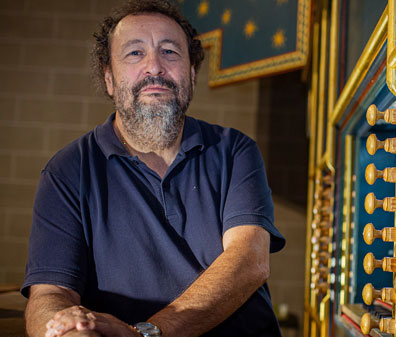
Javier ARTIGAS
Comenzó su formación en la Escolanía de Infantes del Pilar. Realizó estudios de órgano y clave...
+ INFO
At the dawn of the modern organ:
Correa de Arauxo and his time
This year, 2026, marks the 400th anniversary of the publication in Alcalá of the famous keyboard score entitled Libro de Tientos y Discursos de Musica Practica y Theorica de Organo (Book of Tientos and Discourses on Practical and Theoretical Organ Music), composed by the Sevillian organist Francisco Correa de Arauxo. This magnificent work, unique in its genre in 17th-century Spain, reflects the evolution of the Spanish keyboard repertoire from the restraint of the Renaissance represented by the prima pratica to the expressiveness of the Baroque, which took shape from the world of madrigals and Monteverdi’s seconda pratica. We can also find some of the innovations that arose as a result of the technical evolution of the organ, such as the tientos de medio registro, a famous invention, well known in the Kingdoms of Castile, but unknown in others, as the author tells us.
It seems no coincidence that the same decade in which Correa published his book was prolific in the appearance of very important printed collections that reflected the different developments in different geographical regions of Western Europe: Coelho’s Flores de Musica (Lisbon, 1620), Titelouze’s Hymnes de l’Eglise and Magnificat (Paris, 1623 and 1625) by Titelouze, in the Germanic countries Tabulatura Nova (Hamburg, 1624) by Scheidt, and in Italy Il Primo Libro di Capricci e Il Secondo libro di Toccate (Rome 1624 and 1627) by Frescobaldi are examples of the rich fruit of this period. Likewise, manuscript collections such as Lynar A1, in which we find an enormous corpus of the work of Jan Pieterszoon Sweelinck, are also dated to this period.
Sebastián Aguilera de Heredia (1561-1627)
Organ works
Manuel Rodrigues Coelho (1555–1635)
Flores de música pera o instrumento de tecla & harpa (1620)
Francisco Correa de Arauxo (1584-1654)
Facultad orgánica (1626)
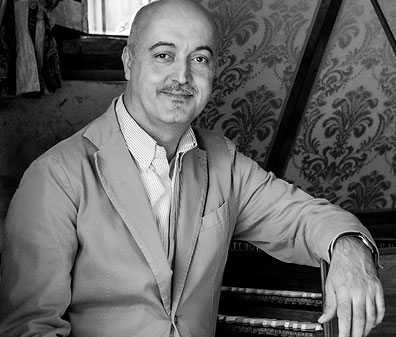
Francesco CERA
Admirado internacionalmente como intérprete del repertorio barroco italiano...
+ INFO
Within the vast Italian organ repertoire, three great composers were active between the first three decades of the XVII century: Trabaci, Frescobaldi, and Rossi. They show affinities with the music of Correa de Arauxo in terms of expressive and rhetorical exploration, achieved through styles that are at times similar or markedly different. The music of Giovanni Maria Trabaci, organist to the Spanish Viceroy in Naples, is characterized by a cantabile contrapuntal style, rich in intense dissonances. Girolamo Frescobaldi, active in Rome at the time Baroque was emerging, reveals in his Toccatas a conception of extraordinary stylistic innovation and a new approach to performance. In his contrapuntal works, he combined Renaissance refinement with Baroque rhetorical intent. Michelangelo Rossi, active in Rome as violinist, organist and Opera composer, displays in his Toccatas a quite theatrical taste for surprise and wonder.
- Giovanni Maria Trabaci (1575-1647)
- Il primo libro de ricercate, canzone franzese, capricci (Napoles, 1603)
- Primo Tono con tre fughe
- Ottavo Tono sopra Rugiero, Decimo Tono trasportato con una fuga sola
- Canzona franzesa quarta
- Canzona franzese quinta sopra Dunque credete ch’io
- Canzona franzesa settima cromática
- Girolamo Frescobaldi (1583-1643)
- Il secondo libro di toccate, canzone… (1637)
- Toccata quarta da sonarsi alla Levatione
- Toccata quinta sopra i pedali
- Toccata settima
- Capricci da sonare
- Capriccio sopra la sol fa re mi
- Michelangelo Rossi (1601-1656)
- Toccate e Correnti (1657)
- Toccata quarta
- Toccata settima
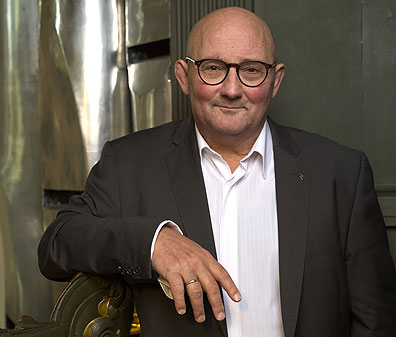
Erwin WIERSINGA
Estudió en el Conservatorio de Groninga con Wim van Beek y obtuvo el Diploma de Intérprete de Órgano con matrícula de honor...
+ INFO
The organworks of J. S. Bach:
an ongoing challenge and inspiration
Johann Sebastian Bach is generally considered as the most important composer in musical history. The diversity of his organworks is an ongoing inspiration and a challenge for organists of all generations. Influenced as a young genius by composers as Pachelbel, Buxtehude and Boehm, Bach studied fellow composers during his whole life. It led to a remarkable development of organ pieces strongly connected to his positions as organist, capellmeister and cantor.
The interpretation of Bach,s music underwent many changes but his music never ceased to interest and inspire composers and musicians!
- Johann Sebastian Bach (1685-1750)
- All organ works
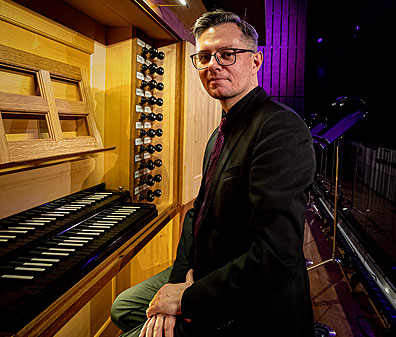
Krzysztof URBANIAK
Profesor de órgano histórico y presidente del Instituto Arp Schnitger de Órgano y Construcción de Órganos de la Hochschule für Künste Breme...
+ INFO
North European music of the 16th–18th century:
from the Renaissance tablatures to the Hanseatic masters of the Baroque
Krzysztof Urbaniak offers us a clear and elegant overview of Sweelinck and his music, as well as the later North German organ school, showing how one tradition gives way to another and ultimately shapes the world of the Baroque organ. Although Dutch, Sweelinck became the principal teacher of a whole generation of German organists who travelled to Amsterdam to study with him. His influence was pedagogical, stylistic and technical. Renaissance polyphonic discipline mixed with emerging Baroque expressiveness; a virtuosic and transparent organ language; the technique of variation or contrapuntal thinking that anticipates the mature Baroque fugue are some of the fundamental contributions of the Dutch composer. His students took this style to northern Germany, forming the first generation of the organ school in this region. Heinrich Scheidemann, Gottfried Scheidt, Jacob Praetorius II and Melchior Schildt established an organ tradition centred on the chorale alongside a language intended for the great North German organs.
- Heinrich Scheidemann (c. 1595–1663)
Jacob Praetorius II (1586–1651)
Gottfried Scheidt (1593–1661)
Melchior Schildt (1592–1667)
Paul Siefert (c. 1586–1666)
Dieterich Buxtehude (c. 1637–1707)
Johann Adam Reincken (1643–1722)
Matthias Weckmann (1616–1674)
Franz Tunder (1614–1667)
SEMINARS
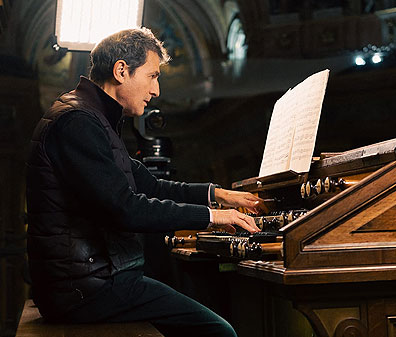
Miguel BERNAL RIPOLL
Rrganista nacido en Alicante. Realizó estudios musicales de Piano, Órgano y Composición en el Conservatorio Superior “Óscar Esplá” de Alicante
+ INFO
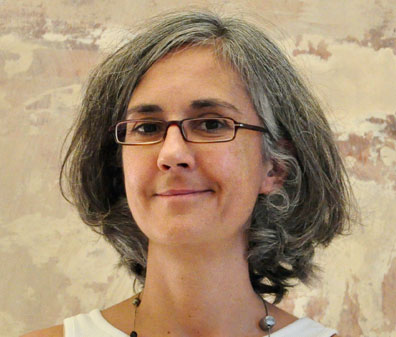
Marta SERNA MEDRANO
+ INFO
Francisco Correa de Arauxo’s “Facultad orgánica”:
Past and present perspectives (1626–2026)s
The history of the Facultad orgánica has been uneven over its four hundred years. There is no evidence of Correa’s tientos being performed before the first half of the 20th century, but the number of extant copies of the book (in Arequipa, Lisbon, Brussels, Germany, Oxford, Madrid, Paris and the United States) demonstrates the interest it has aroused among both musicians and booksellers over the centuries.
There is no need to seek a new place for the repertoire, nor to obsess over promoting it (there are numerous monographs), as it has had a secure audience since the 1950s; however, it is important to persevere in the study of the works, their understanding and interpretative approach.
The tientos present a complex structure in which the apparent common notation of the fugue points is not juxtaposed arbitrarily, but rather in accordance with a subtle constraint similar to that governing the composition of sacred oratorio texts around 1600. However, the interest in these works lies not in the system but in the way Correa transgresses the rules he imposes upon himself, whilst also displaying his contrapuntal irregularities by exposing himself, in the presentation of moral cases through music.
Correa walks the boundaries of the norm without transgressing it and without adhering to it, offering an exquisite and perfect model of a musical work: perhaps an opportunity to rethink how to move forward even amidst the impasse and global crisis of 2026, bewildered by the same incomprehensible floods, first in Seville in 1626 and today by the physical and metaphorical overflows and deluges of our present day.
Krzysztof URBANIAK
Profesor de órgano histórico y presidente del Instituto Arp Schnitger de Órgano y Construcción de Órganos de la Hochschule für Künste Breme...
+ INFO
North German organs from the late 16th and early 17th centuries
When referring to “North German organs” of the late sixteenth and early seventeenth centuries, the term does not denote instruments produced within a unified nation-state, as a political entity called Germany did not yet exist. Rather, it designates a culturally and economically interconnected region shaped by long-distance trade networks, fluid political borders, the widespread use of Low German (Plattdeutsch) as a lingua franca, and a complex and often shifting confessional situation. The Hanseatic heritage, in particular, connected cities such as Lübeck, Hamburg, Danzig, Riga, Tallinn, and Stockholm, while also exerting significant economic and cultural influence on centres beyond the League itself, including Copenhagen and Vilnius. This constellation established a broad network within which artistic concepts, technical knowledge, and craftsmen circulated.
Within this context, organs were seldom conceived as static or definitive works. Instead, they were frequently modified, expanded, and reconstructed over successive generations. Organ builders themselves were highly mobile, moving between cities along the Baltic and North Sea regions and forming dynastic, professional, and pedagogical networks. Through family ties and teacher–apprentice relationships, technical practices and aesthetic principles were transmitted, adapted, and transformed. What is retrospectively described as the “North German organ” thus appears less as a fixed and homogeneous type than as the product of sustained exchange across regions, confessional boundaries, and political territories.
This lecture examines the geographical and socio-political framework of this organ culture, the migration and interconnection of its builders, and the role of familial and pedagogical lineages in shaping stylistic continuities and transformations. It also addresses the historiographical construction of the “North German organ,” including the emergence of stereotypes and classificatory models in twentieth-century scholarship. Through selected case studies, the discussion seeks to reassess whether the term denotes a clearly delimited regional style or rather a broader North European organ culture characterized by mobility and interaction.
CLASSES
- The course will have a duration of 50 hours approximately.
- There will be a maximum of 12 active students.
- Academy proffesors will offer 45 minutes individual lessons to those students who request them. Enrollment for these classes will be held in strict order of registration.
- Some of the scores for the course can be provided on request.
ACCOMODATION
APPLICATION
Please send your APPLICATION FORM and CV to: echevarria.org@telefonica.net
ACTIVE PARTICIPANT: Registration 180€
- Individual lesson: 40€.
PASSIVE PARTICIPANT: 90€
Bank: BANCO SANTANDER
Registration deadline: until 30th June, 2026.
INFORMATION
Plaza de San Pablo, 8 E-34005 – Palencia
Teléfono: (+34) 629 878 681
Correo electrónico: echevarría.org@telefonica.net
www.aaopalencia.org
ORGANIZA
PATROCINA

Política de Privacidad
Aviso Legal
Política de Cookies